


Your suppliers are pricing to win. Are you negotiating to match?
Financial Headwinds Are Real — And They’re Compounding
Every CFO and COO reading this knows the feeling: margins that were manageable eighteen months ago are now under siege from every direction. Wage inflation continues to outpace productivity gains. Raw material prices remain elevated and volatile. Energy costs have surged. Freight, warehousing, insurance, and technology costs are all climbing. And now, layered on top of all of that, tariff and trade policy uncertainty is adding a fresh layer of risk to your supply chain.
All good leaders are responding, but are the conventional responses — raising prices, cutting headcount, deferring capital investment — worth the trade-offs? Raising prices risks customer attrition in a competitive market. Restructuring often damages morale and institutional knowledge. Yet most executive teams overlook a powerful, low-disruption lever hiding in plain sight: their existing supplier base and operating budget.
Companies that optimize supplier costs do not just cut expenses — they focus on total cost of ownership and long-term value creation
The Pareto Blind Spot Most C-Suites Miss

Most organizations apply rigorous procurement discipline to the 20% of suppliers that account for 80% of total spend — the strategic vendors. Core raw materials, capital equipment, key service contracts: these receive dedicated teams, competitive bidding, and regular contract reviews.
But the remaining 20% of spend - what procurement professionals call “tail spend” - tells a very different story. This segment is typically spread across hundreds of suppliers including many cost categories such as MRO supplies, logistics, uniforms, telecom, insurance, waste services, office expense, etc. Suppliers in these categories are almost always undermanaged. Internal managers handle these supplier relationships as a secondary responsibility, benchmarking data is scarce, and the assumption persists that the savings potential simply isn’t worth the effort.
That assumption is wrong — and it’s expensive. ERA Group’s client engagements across manufacturing, healthcare, financial services, and non-profit sectors consistently reveal that 10–30% savings are achievable within tail spend categories. The opportunity is agnostic to company size and industry, with savings potential being transformative to the business.
Why Even Strong Companies Leave Money on the Table
It would be easy to assume that underperforming on supplier costs is a sign of poor management. In reality, the barriers are structural — and they affect even the most sophisticated organizations.
On the internal side, functional managers who oversee indirect spend categories rarely have deep expertise in those markets. A procurement director skilled at sourcing raw materials may have limited insight into the cost drivers behind logistics contracts or telecom pricing. Compounding this, visibility into actual spend is often incomplete — P-cards obscure purchasing data, invoices are processed without strategic review, and few organizations can quickly answer the question: “What did we actually spend with supplier X across all locations and categories last year?”
On the supplier side, the dynamic is equally clear. Suppliers are sophisticated pricing professionals. They segment their customers, protect margin wherever possible, and use information asymmetry to their advantage. Not every customer receives the same price. Bundled service agreements often obscure where real costs lie. And while the lowest quoted price is easy to compare, total cost of ownership — including quality, reliability, processing costs, and rework — is far harder to assess without deep category knowledge and resources.
- Confirmation bias: Confirmation bias leads teams to assume existing pricing is competitive when it hasn’t been benchmarked in years.
- Relationship inertia: Long-term supplier relationships, while valuable, can become expensive if they continue without periodic review, including a total cost of ownership assessment.
- GPO limitations: Group purchasing organizations provide a good price for the average customer, not always the best price possible for each company’s specific needs — optimal pricing requires a tailored approach.
- Benchmark gaps: Without external benchmarks, companies simply don’t know what “good” looks like in most cost categories.
Suppliers know how to reduce your costs. They just won’t volunteer that information unless the right questions are asked by the right people.
The Case for Third-Party Expertise
This is where the game changes. Leveling the playing field with suppliers requires three things that most internal teams cannot easily provide: category-specific market intelligence, negotiation expertise across dozens of spend categories, and the time to execute a rigorous, structured process.
An experienced third-party advisor brings all three. More importantly, they are independent from suppliers — meaning their sole objective is
your outcome, not a commercial relationship with the vendor. This independence changes the dynamic of every negotiation. Suppliers know they are dealing with a counterparty who understands their cost structures, has access to external benchmark data, and will construct a competitive process that demands genuine best pricing.
The best engagements don’t just surface one-time savings. They establish a repeatable framework: spend is analyzed and categorized, requirements are clearly defined, assumptions are validated, markets are approached strategically, and results are tracked against a baseline. Savings are implemented — and then protected through ongoing monitoring, contract controls, and performance measurement that prevent the inevitable drift back toward supplier-favorable pricing.
ERA Group has documented this process across client engagements spanning manufacturing, financial services, healthcare, non-profits, and food and beverages to name a few. Results consistently range from $100,000 to over $5 million+ in annual savings per engagement — and frequently include operational improvements that extend well beyond the initial scope.
The Cost of Waiting
For companies navigating today’s margin pressures, supplier cost optimization is not a long-term initiative to schedule for a future quarter. Every month that passes without a structured review is a month of avoidable cost flowing out the door. The savings are there. The benchmark data exists. The methodology is proven.
The only question is whether your organization will be the one to capture it — or leave it for your competitors to find first.
Ready to Find Your Hidden Value?
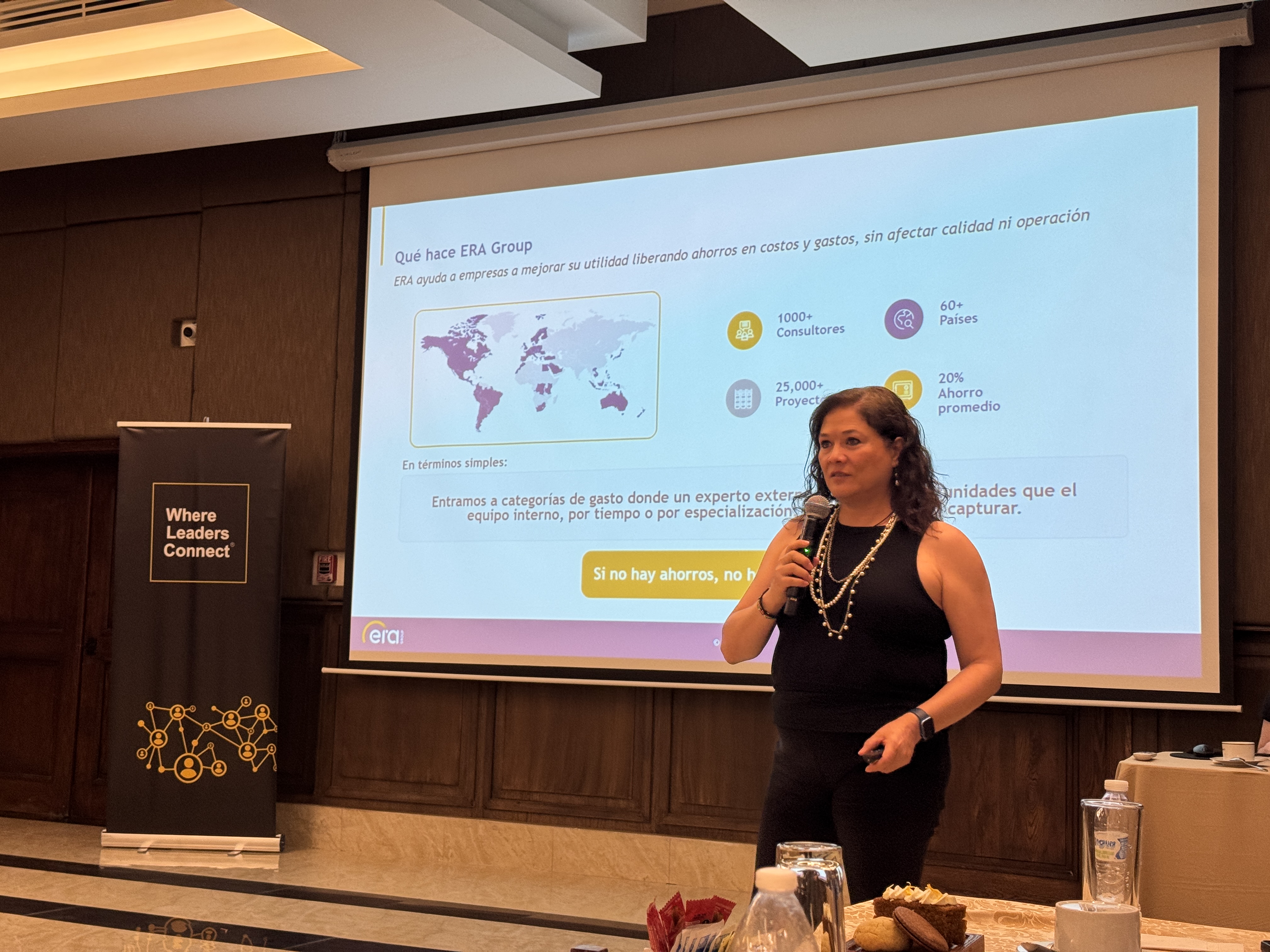
ERA Group partners with business leaders to illuminate new opportunities for cost savings that drive bottom-line impact. Since 1992, we’ve helped thousands of clients achieve best-in-class results, improve operational efficiency, and maintain savings over time.
Our global network of consultants delivers value to your team with in-depth category knowledge, real-time industry benchmarking data, and expertise across countless supplier categories. Our no-savings, no-fee approach means there is no fee for our services if we do not find savings.









.jpg)
.jpg)
.jpg)
.jpg)
.jpg)