
No items found.
All articles

Optimising for a normal day will not save you on a critical day

Content

Share this article

I will be the URL to copy

whatsapp

optimising for normal days won’t save you on critical days

optimising for normal days won’t save you on critical days

optimising for normal days won’t save you on critical days

What the Port of Barcelona blockade teaches us about how we optimise costs when everything is running smoothly.

In a professional kitchen, everything seems simple when service is running smoothly.

Orders come in. Dishes go out. The team moves almost without speaking. Everyone knows what to do.

But that sense of fluidity isn’t a coincidence.

It depends on how the kitchen is organised.

On how the ingredients are prepared.

On whether there’s room to spare or if everything is operating at full capacity.

Until one day something goes wrong.

A supplier fails to deliver. An oven breaks down. Demand exceeds expectations.

The collapse occurs when the kitchen can’t keep up.

And not because it’s poorly managed, but because it was designed for a scenario where everything flows smoothly.

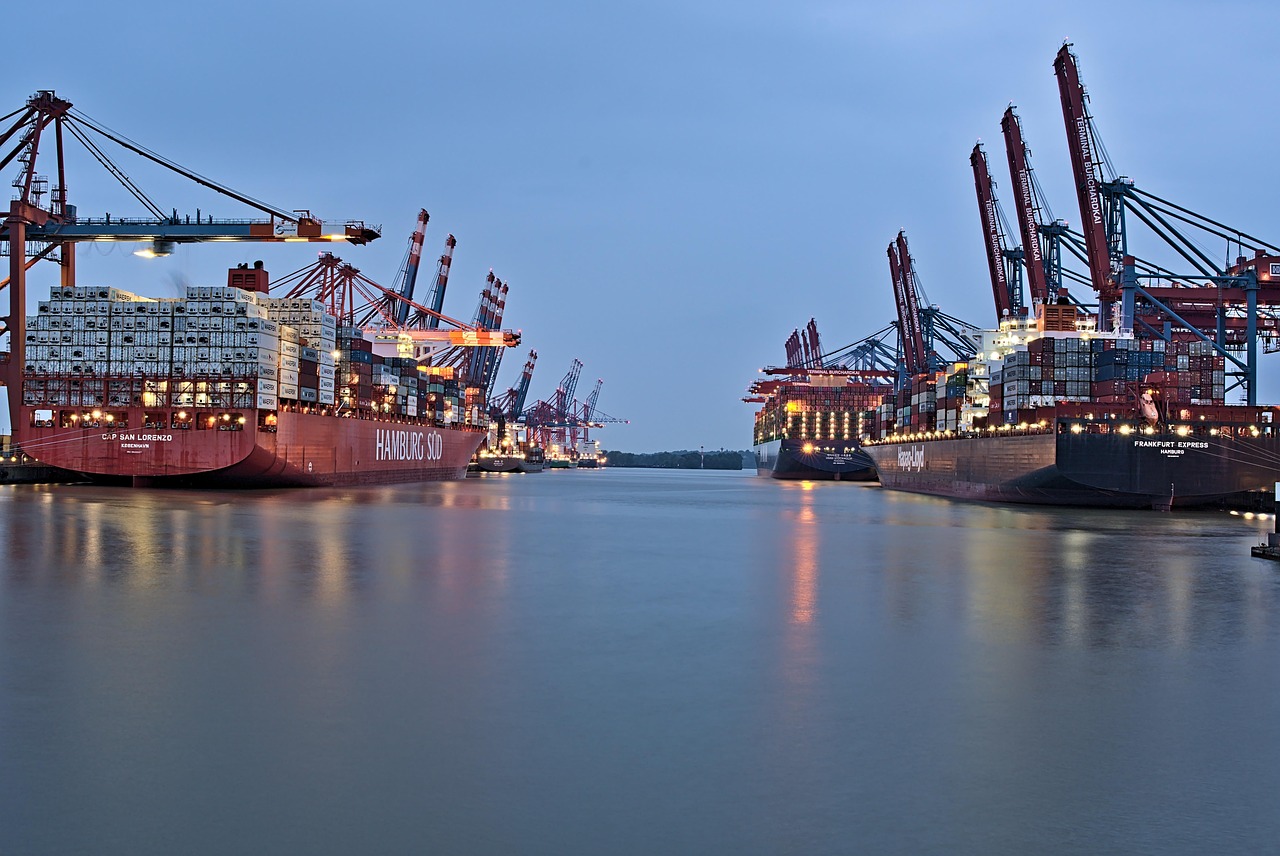
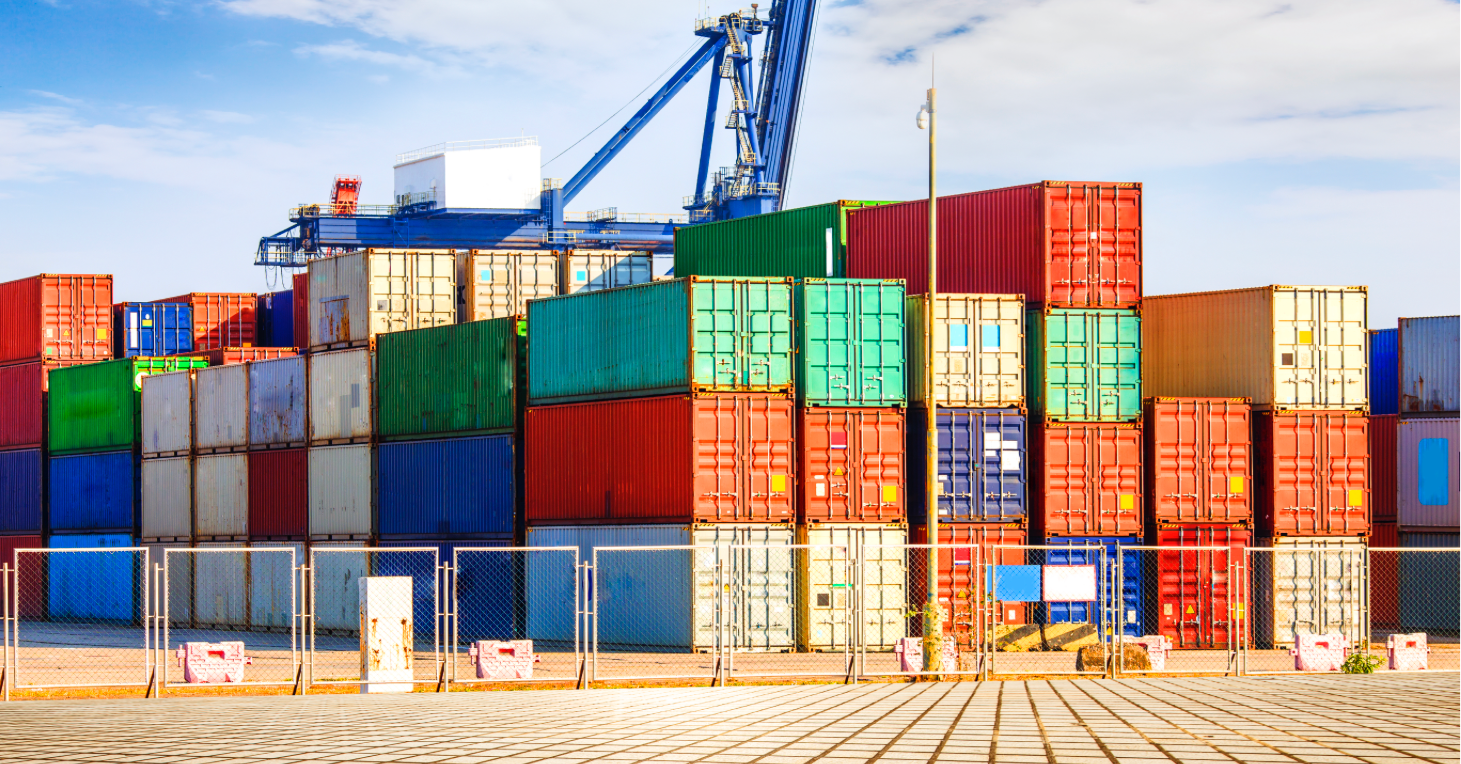
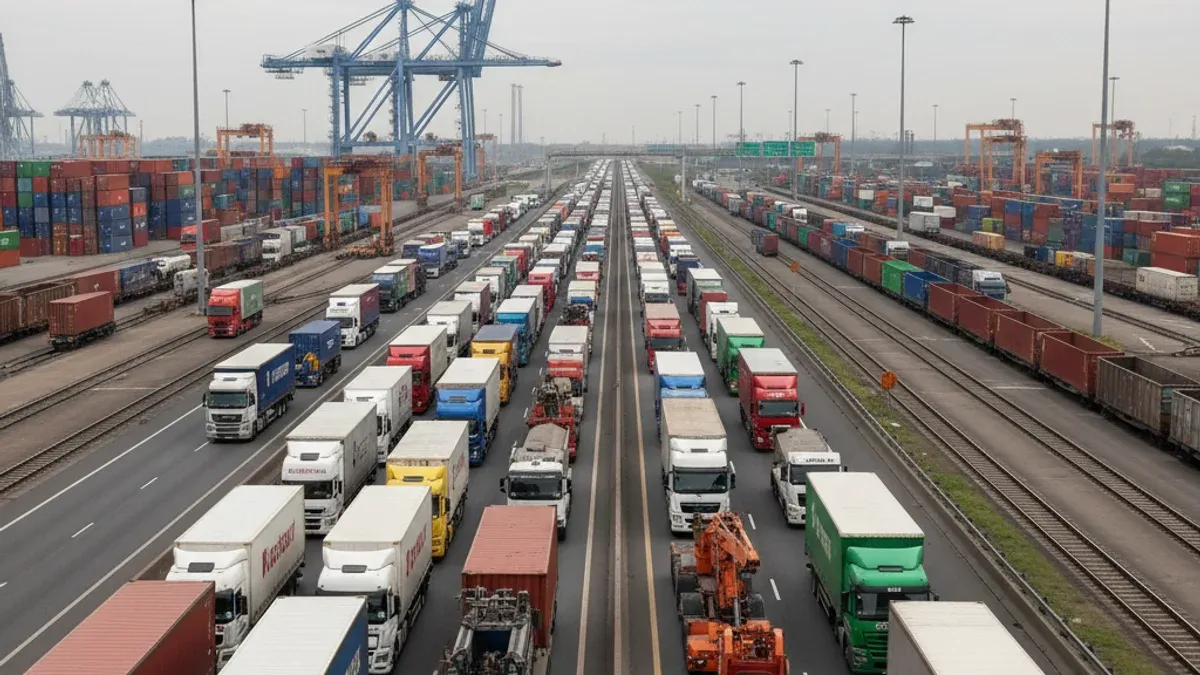
Something very similar has happened recently with the rail disruptions in Catalonia and the blockade of the Port of Barcelona.

The result has been devastating: millions in losses, delays in production lines, and cost overruns that some business associations estimate at up to two million euros per day during the first days of the crisis, according to El Confidencial in an article published on February 5.

And, as in restaurants, the problem isn’t where we usually look when we talk about costs.

When the system grinds to a halt, everything else comes under strain.

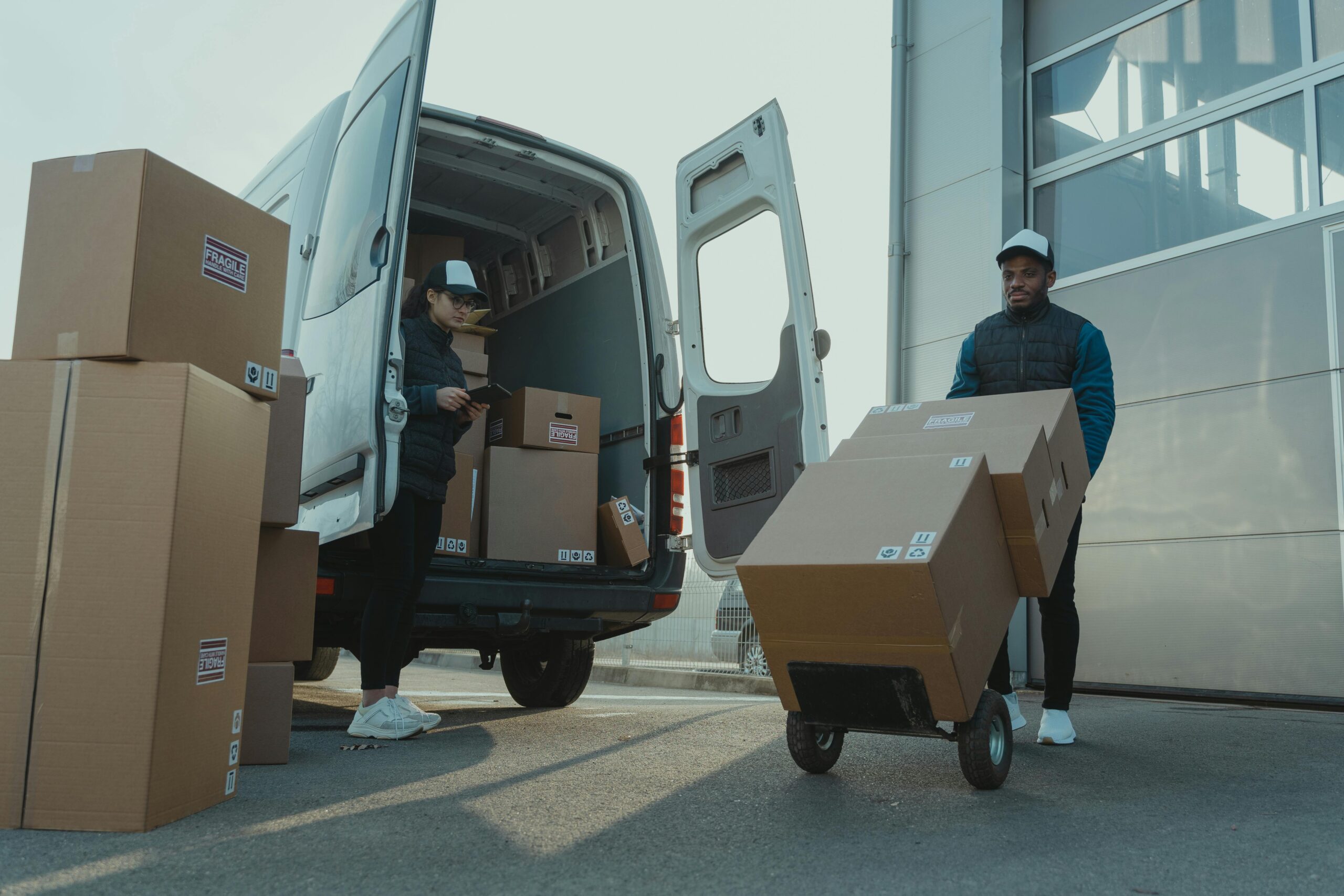
The Port of Barcelona is a strategic infrastructure. Not only because of its volume, but also because of the role it plays: it connects raw materials, industrial components, and goods with factories that operate on very tight logistics schedules.

When the rail system grinds to a halt, companies look for alternatives: road transport, air freight, or product exchanges between companies.

Any solution is welcome if it saves time.

Any solution is welcome if it saves time.

The problem is that almost all of them are more expensive, because the system was never designed to operate without that hub.

The same thing happens in a kitchen; when a stove is out of commission, you can’t stop cooking. The team makes do with what they have: orders are prioritized, delays are accepted, improvised decisions are made, and providing good customer service becomes difficult.

Service continues, but at the cost of a great deal of stress.

In the case of the Port of Barcelona, automotive, pharmaceutical, textile, and chemical companies have activated contingency plans to avoid production stoppages, absorbing cost overruns that no one had budgeted for in this scenario.

The mistake of optimising only for things to go smoothly

The cost that doesn’t appear in any Excel spreadsheet is the one no one saw coming.

It’s not in the annual budget. It’s not included in the negotiated terms. It doesn’t appear in the base scenario.

But it ends up happening anyway.

It is the cost of reacting too late. The cost of paying more due to urgency. The cost of accepting worse terms because there is no longer an alternative.

It is the cost of having designed the structure for efficiency, but not for stress.

When everything is optimised down to the last detail, any deviation becomes more expensive.

The news report itself hints at this: the rail network is saturated, shares capacity with commuter trains, has no operational margin, and the lack of information exacerbates the impact. It is not just a technical problem; it is structural.

Translated into business terms: there are critical processes that depend on a single “pass through the kitchen.”

As long as it works, no one questions it.

When it fails, the entire system descends into chaos.

And that not only affects logistics costs but also results in lost efficiency, organizational strain, emergency decisions, and direct pressure on the half-year margins.

As some operators explained to El Confidencial, replacing the train with trucks is not easy; there aren’t enough resources available, and delivery times skyrocket.

It’s exactly like when a kitchen tries to handle more orders than it was designed to manage.

The problem isn’t optimisation.

The problem is which scenario you’re optimising for.

The question you should ask yourself before the next crisis hits
Costs are not a necessary evil; they are a strategic decision.

The question is not whether there will be another lockdown.

The question is: How is your cost structure designed for when it happens?

Do you depend on a single critical supplier? Do you have real alternatives or just theoretical ones? Do you know how much margin you would lose if a component stops working?

That’s why it’s important to ask not only how much they cost, but how they perform when the system goes down.

Many executive committees optimise for day-to-day operations, not for crisis situations. They seek maximum efficiency under normal conditions.

The problem is that normal scenarios are becoming increasingly rare.

In the kitchen, that’s called working at full capacity.

In business, we usually call it optimisation.

Designing for stress does not mean oversizing.
It means understanding where your breaking point is before you reach it.

The blockade of the Port of Barcelona shows that a significant part of the industrial fabric operates on very tight budgets and with little room to manoeuvre.

And when a key piece of infrastructure fails, the real cost isn’t the alternative itself, but everything that falls into disarray around it, as if it were a side effect.

optimising costs also means designing for stress.

Not for the day when everything falls into place. Not for the supplier who always delivers. Not for logistics that flow without friction.

True optimisation means asking yourself:

What happens if this part breaks down? What happens if the flow is interrupted? Where is the margin when something gets stuck?

Because efficiency designed solely for the ideal scenario works…until it doesn’t.

Often, the solution involves reviewing costs from the perspective of the bottleneck.

In other words: identifying where there is a real dependency and where there is no viable alternative.

But above all, what decisions are made in an emergency and how much they cost when they come too late.

In the kitchen, the restaurants that survive aren’t the ones with the cheapest menus, but those that know where they can absorb pressure without disrupting service.

The same thing happens in business.

The blockade of the Port of Barcelona is not a one-off incident, but a reminder that many cost models only work under ideal conditions.

And that optimising without considering crisis scenarios is, in reality, just postponing the problem.

Because when the kitchen breaks down, it no longer matters how well the menu was designed.

And when it comes to costs, it’s almost always too late to improvise.

Associated Articles

You Might Also Like

News

Goals, tariffs, and technology: Three Supply Chain Pressures in 2026

News

Spanish investors have doubled their investment in oil and gas since the start of the conflict with Iran

News

Uncertainty is not context. It's cost
News

Procurement in 2026

News

The cost that no one sees

News

Five essential skills to become a successful leader.

News

Leadership is not control

News

Electrifying the last mile in Central America

News

The true cost of corporate sustainability

News

Market shifts attributable to Guatemala's new Competition Law

News

When the retail boom has already landed, but the cost journey continues to take its toll

News

Romnes AS enters into a cooperation agreement with ERA Group regarding cost analysis

News

Appraisal of Cost Architectures

News

Aspiring to Market Dominance in 2026?

News

Interview with our new partner: Arthur Dobma

News

Going green: Fast-food chains are focusing on sustainability

News

UK Named Best Country for Business in 2018

News

Artificial Intelligence Strategy in Procurement: Pragmatic Webinar Series for Key Decision-Makers

News

Webinar with Dominique Seux: his presentation in 6 key points

News

The Strategically Overlooked: The Latent Potential of Indirect Costs

News

Strategic Expansion of Executive Leadership: ERA Group DACH Strengthens Marketing and Franchise Recruitment

News

ERA Insights Newsletter 26/01 - Strategic Procurement

News

Going green: Fast-food chains are focusing on sustainability

News

UK Named Best Country for Business in 2018

News

The Evolution of Bricks and Mortar in Response to E-Commerce Retail

News

Teachers Spending Hundreds of their Own Money on Supplies

News

Southampton & Felixstowe Ports in box congestion crisis

News

‘Shrinkflation’ hits three big name brands

News

What is Professional Services Procurement and How Do You Ace It?

News

KFC Splits Supply Chain Management Between Two Companies

News

ERA expand to Dubai, UAE

News

Hotel rates rise strongly

News

The Temporal Progression Continued Unabated

News

Your "Just-in-Time" Strategy is Defunct

News

Foreign Exchange Dynamics in LATAM

News

Your 2026 Margin Projections

News

The Profitability Index

News

Evolution of oil and plastic raw material prices

News

Walter Raes becomes a partner at ERA Group

News

How to minimise the impact of rising lemon prices

News

The link between sustainability and cost optimisation is obvious

News

2025: An Overview of Costs, Complexity, and the Path to 2026

News

How we are adapting to the challenges of COVID-19

News

Electrify your fleet for a more sustainable world

News

Participation in Expoagua in Chile

News

Franklin Tucker and his team join the Chamber of Commerce; Industries and Agriculture of Panama

News

What energy savings could your company realise?⁣

News

Challenges and Opportunities in the Chilean Electricity Sector

News

Waste: the silent cost many companies continue to overlook⁣

News

Inadequately managed security poses a dual threat

News

Waste management as a strategic imperative

News

The perennial challenge of logistics in Latin America

News

The end of the 'era of cheapness'

News

Decline in maritime transport prices

News

Webinar summary: "New taxation for 2025: a revolution for your vehicle fleet"

News

Ports, railways and roads: the significant logistical advancement that Guatemala cannot defer

News

The impact of tariffs on geopolitics and the foundry industry is currently being planned

News

Czech manufacturer bets on traditional Artis ski brand

News

How Much Is Your Company Losing in MRO Management

News

The delay is not the problem. The problem lies in how that time is utilised.

News

The sea is the same for everyone; what changes is who is at the helm

News

Tariffs, Geopolitics, and Smelting: Why the Real Impact Is Not Reflected in the Price, but Rather in the Strategic Planning

News

Optimising energy use is like carrying an adaptor

News

World Logistics Day: Why Companies Can No Longer Afford Reactive Logistics

News

Delivering tangible impact on our clients' operations

News

Costs, margins and opportunities: how Central American companies can thrive amidst uncertainty

News

Analysis of Guatemala's Trade Balance in 2024 and Outlook for 2025

News

ERA Group highlights four measures for companies to increase efficiency and resilience through water optimisation

News

Cost Management Barometer 2025: Strategic application for Latin America and Central America

News

Argentina Copper 2025

News

Belgium breathes new life into ERA Group in France

News

Feedback: the 2024 ERA Group conference as experienced by a new partner

News

Webinar summary: SMEs/SMIs – From risk management to insurance management

News

Feedback: the ERA Group Foundational Training as seen by Aïda Kamara

News

Webinar summary: "Happy CSRD: from constraint to strategic opportunity"

News

Webinar summary: “Insurance: knowing how to manage invisible risks”

News

Webinar summary: "Parcel delivery: understanding pricing structures and avoiding pitfalls"

News

Webinar summary: "The hidden costs of temporary work"

News

Webinar summary: "Controlling your electricity costs in the face of market uncertainty"

News

Modern energy in the factory of the future with the support of IIOT technologies

News

Triple victory for ERA Group at the 2025 Global Franchise Awards

News

How to avoid unhealthy dependence on IT suppliers

News

How to break free from unhealthy dependence on IT suppliers

News

Don't forget to consider savings

News

Ethanol Legislation: a stride towards sustainability or an unwarranted expenditure?

News

A New Trajectory for Food and Beverage Companies in Latin America in 2025

News

The digital payments revolution: a strategic enabler for growth in LATAM

News

Robotic process automation in the time of COVID-19

News

Trade conflicts have commenced

News

A Social Impact Report on your company also generates direct value for your customers

News

Participation in the 2nd edition of the Finance Transformation Summit

News

Executive Breakfast in Guatemala on Logistics: "The Era of Business Transformation"

News

Expert tips: the issue dedicated to cardboard packaging is now available!

News

How do global tensions and US monetary policy influence business costs in Guatemala?

News

Interview with Philip Declat (Country Manager Belgium) in Trends – ERA Group Belgium grows 10% per year

News

Scanning the future to reduce costs and foster growth: insights for contemporary leaders

News

Financing one year earlier than revolving credit

News

Yarak Yarak | New ERA Group partner since 04/2023

News

It's always been done this way

News

Greenwashing isn't just bad press

Obtain insights that propel your business.

Thank you! Your submission has been received.
An error occurred during form submission.