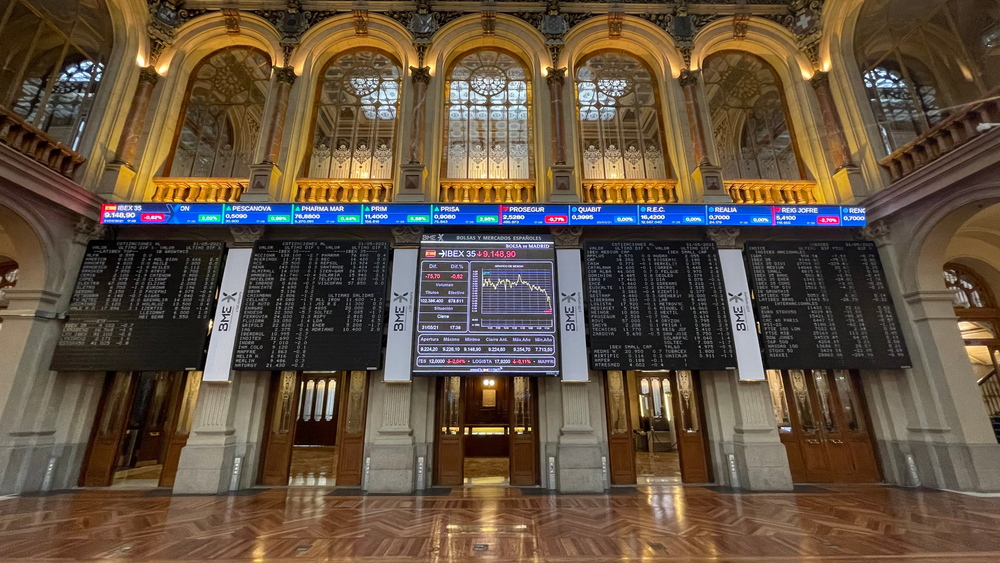

Some people just stare at the departure board, while others leave the airport.
There are small moments that say more about us than they seem to.
Such as when one's flight experiences a delay.
One observes the departure board.
Initially, with patience. Subsequently, with a discernible degree of tension.
Initially, no discernible change occurs. “It is merely a twenty-minute delay.”
Subsequently, half an hour.
An hour passes.
And time starts to feel different.
Some repeatedly rise to consult the screen. Others voice their dissatisfaction. Still others resign themselves and await.
And then there are those who do something different.
Because the delay, in itself, isn’t the problem. The problem is what you do with that time.
And that, whilst perhaps not immediately apparent, is highly indicative of one's decision-making processes. Furthermore, it reflects how one's organisation navigates decisions when circumstances deviate from initial projections.
A highly analogous situation is unfolding within corporate entities concerning economic factors and operational costs.
Allow me a few moments, and I shall elaborate.
Delays as a Mirror of How We Manage Uncertainty
From an external perspective, the narrative consistently remains: uncertainty, disruptive events, and pivotal moments that alter historical trajectories.
With everything that’s happened since January 1st, I’m not telling you anything new.
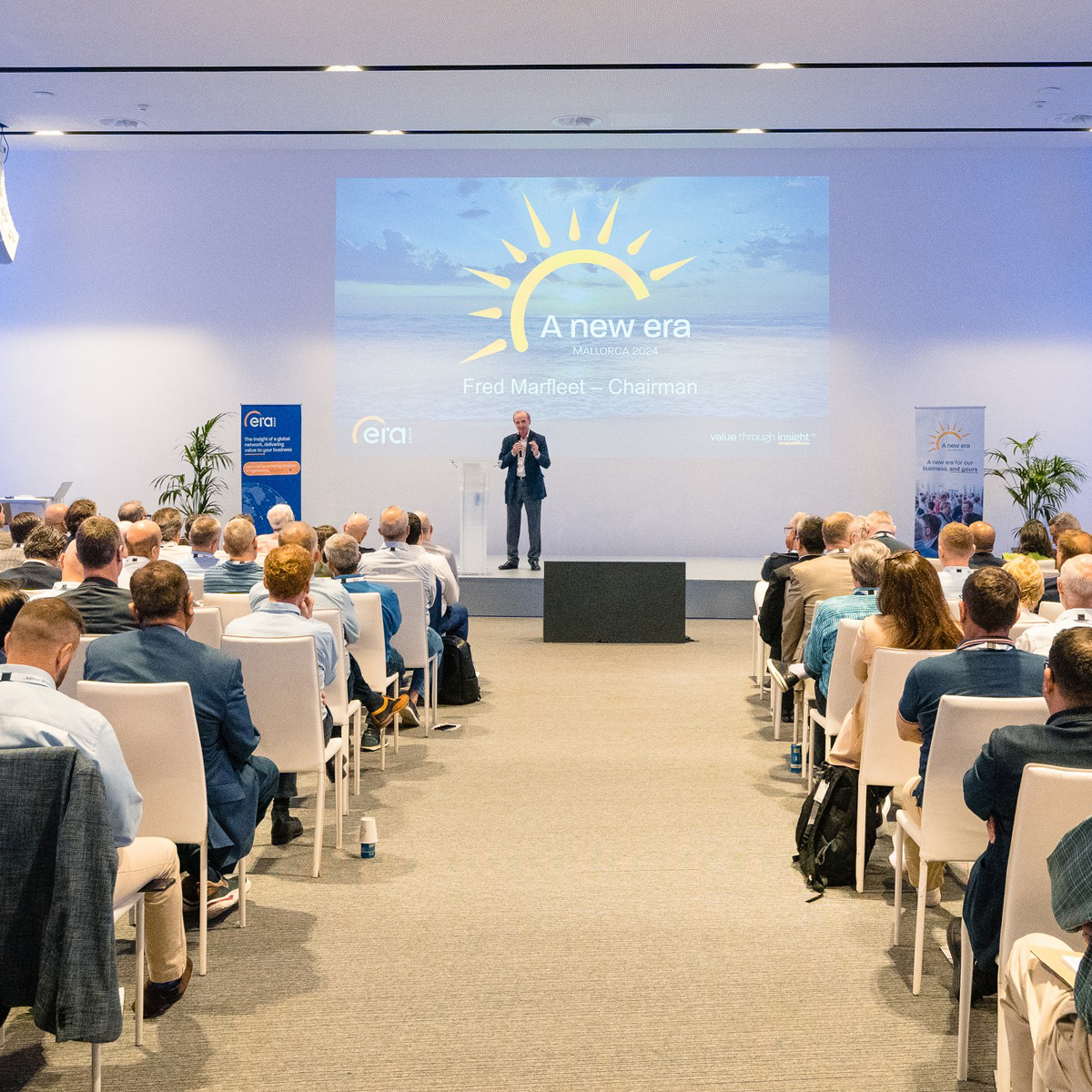
And yet, according to a study by ERA Group, the global economy has held up much better than almost everyone expected.
The predicted recession didn’t happen.
Employment levels have persisted at historically elevated rates.
And despite pandemics, wars, and trade tensions, planes are still in the air.
That doesn’t mean the journey is comfortable; it means that a delay isn’t a cancellation.
We often find ourselves in an interim period. An uncomfortable space where action is still possible.
But not everyone takes it.
Some wait until they have all the information. Others hope the situation will improve. Others postpone because “now is not the time.”
Consequently, the protracted delay progressively erodes the margin.
This is precisely where numerous companies err: they conflate an unknown precise arrival time with being entirely disoriented.
The problem isn’t the delay; it’s not knowing what to do in the meantime
At an airport, a delay becomes unbearable when you have no information.
This is due to our inherent aversion to uncertainty.
And even less so when we’ve paid for a hotel for seven days and lose one due to an unforeseen event.
We can’t do anything about the delay, but we can decide what to do in the meantime: go out, wait, or change plans.
A remarkably similar phenomenon is unfolding within the contemporary economy.
The ERA study delineates distinct risks.
These are not novel, yet their prominence has increased:
- declining demographics in Europe and China,
- exerted pressure on public debt,
- exacting financial markets,
- and an increasingly volatile geopolitical landscape.
None of this happens suddenly.
Nor are they poised for immediate, explosive manifestation.
It’s a long delay, announced well in advance.
And yet, many organizations continue to behave as if the flight were set to depart in five minutes.
Demographics: When the boarding gate runs out of passengers
Some airports are packed, while others see fewer and fewer people waiting.
This leads those airports to stop operating flights in the winter and to operate only on the busiest routes during the summer.
An analogous trend is observable within the working-age population.
Europe and China have attained a juncture where their populations are commencing to contract or age precipitously, whilst other regions persist in their growth trajectory.
According to ERA’s analysis, much of Europe’s employment growth now depends on migration. Without it, there wouldn’t be enough people to fill the jobs.
For a CEO or a CFO, this isn’t a sociological reflection.
It is an operational variable
That influences where one invests, where one produces, and where one recruits.
Ignoring this structural shift is like planning an airline route without checking if there are enough passengers to sustain it.
Technology: it’s not a direct flight, it’s a potential fast track
Every so often, the promise of the “direct flight” emerges. The technology that is supposedly going to change everything.
A comparable phenomenon is unfolding with artificial intelligence.
The ERA Group study shows positive signs, especially in the United States, where productivity has begun to grow above 2% after years of stagnation.
In Europe, however, the impact is much more uneven.
There is an undeniable reality: AI possesses the capability to abbreviate the journey, yet it does not achieve this autonomously.
It does not constitute a guaranteed shortcut. Rather, it is an infrastructure necessitating judicious utilisation.
And, above all, it is unwise to build financial plans as if the flight were miraculous.
AI can provide assistance when one comprehends the full scope of its potential contributions to one's business.
Markets and debt: when tickets were cheap for too long
For years, flying was cheap. Low-cost carriers boomed, and travel became accessible to everyone.
A comparable scenario transpired within business and the economy: low interest rates, ample capital, and manageable debt.
Governments and companies got used to that moment.
Presently, the context has diverged.
Rates have escalated, markets exhibit greater exigency, and valuations reflect an optimism that, at a minimum, necessitates circumspection.
The study notes that the debt problem isn’t immediate, but it is cumulative.
It’s not the flight that gets cancelled today; it’s the one that, in a few years, will force you to pay more and more for having booked without thinking.
For companies, this translates to less reliance on optimistic assumptions and more discipline in investment, costs, and financial structure.
Tariffs and geopolitics: constant gate changes
One of the hardest elements to manage isn’t so much the cost, but the lack of a stable framework.
Frequent alterations in tariffs.
Political decisions that are hard to anticipate.
An international order that no longer functions as it used to.
Like when they change your gate and you’re no longer even sure if you’re in the right terminal.
And in business, there’s no clear new rule
What there is, is the need to continually adjust.
The challenge does not lie with the change per se.
The problem is not having room to adapt.
The famous “resilience”
Here the buzzword usually pops up: resilience.
Put that way, it seems to mean putting up with everything with a smile, as if you were the star of a motivational poster.
But it’s not about resigning yourself.
It’s about not getting stuck staring at the display.
The study highlights a more compelling observation:
The economy has withstood numerous shocks due to companies and governments adjusting their decisions, prioritising, and reallocating resources.
Resilience does not pertain to mere endurance.
It involves acting upon information and capitalising on opportunities, ensuring that, with the available tools, waiting periods are not squandered.
Planning for the delay is part of the journey
When you know the flight is delayed, the smart thing isn’t to get even more upset.
It’s deciding:
- Do I leave the airport or stay?
- Do I change my route or wait?
- Do I make the most of the time or waste it?
For a company, today that means:
- Don’t paralyse decisions out of fear of the context.
- Don’t overreact to every headline.
- And don’t ignore structural changes by focusing only on the short term.
Because, in the end, leaders who combine short-term prudence with action on fundamental changes are the ones best positioned when the flight finally takes off.
optimising costs means making better use of time
From this perspective, optimising costs isn’t about cutting back.
It’s about seizing the moment even when it seems bad for business.
Seen this way, optimising costs means:
- Reviewing structures with less favourable scenarios in mind.
- Investing in technology with real returns, not just promises.
- Adjusting operations to demographic and geographic realities.
- Avoiding financial commitments based on unrealistic assumptions.
- And making decisions before the delay turns into an emergency.
As the delay is already upon us.
The difference isn’t in who complains the most, but in who leaves the airport, makes the most of the time, and returns with a margin.
And when the flight finally boards, it becomes clear who understood the journey and who spent hours staring at the departure board waiting for someone else to decide for them.
If you want to take the lead and seize the moment to optimise your company’s costs, just reach out to me.
We appreciate you taking the time to read this.
𝗙𝗲𝗹𝗶𝘇 𝗱í𝗮.