
No items found.
All articles

The sea is the same for everyone; what changes is who is at the helm

Content

Share this article

I will be the URL to copy

whatsapp

The day electricity also started displaying the 'sold out' sign

The sea is the same for everyone; what changes is who is at the helm

What a voyage from Menorca to Barcelona has to do with energy governance in your company

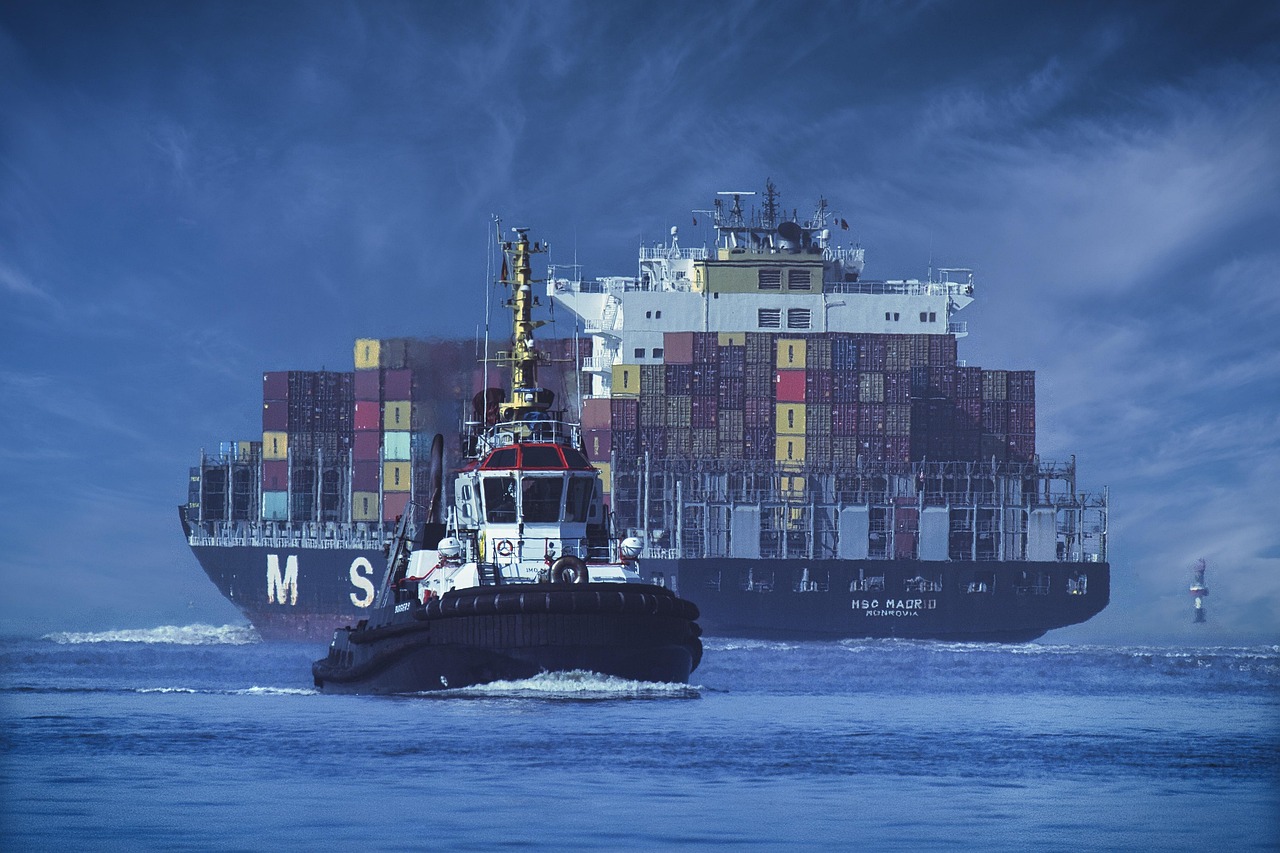
There’s something you discover when you sail a boat. I’ve told you before about my experience on the Barcelona–Menorca route.

The wind is the same.

The weather is the same.

The distance doesn’t change.

And neither does the sea.

However, not all boats make the crossing the same way.

Some arrive with efficient fuel consumption, a steady course, and a calm crew.

Others arrive with unnecessary detours, forced manoeuvres, and the feeling of having been reacting the whole time.

The difference isn’t in the sea.

It lies in how the helm was handled and the decisions made along the way.

And that has a lot to do with how companies are managing their energy today.

Energy is not an operational matter. It is a decision about how the ship is steered.

In many executive committees, energy is still treated as just another category: it is delegated, negotiated, signed off on, and filed away.

As long as there are no surprises, no one questions it.

But when you analyse the evolution of the energy market, as reflected in ERA Group’s technical reports, you realise that this is not a stable expense.

We are dealing with a variable that has a direct impact on margins, financial forecasts, and competitiveness.

And when a variable can alter your margin in a matter of months, it ceases to be merely operational.

It becomes a matter of governance.

Because it is not a technical problem.

It’s a strategic decision about how much risk you take on, what criteria you use to buy, and who is accountable when the market gets tense.

The sea is the same for everyone; what changes is who is at the helm

Price isn’t everything.

On a voyage, it’s not the most expensive ship that wins, but the one that knows how to read the wind and adjust its sails at the right moment.

Something very similar happens in the energy sector.

The decision isn’t simply to set a price or go with an index.

The decision is how much risk you are willing to take and under what criteria.

Because setting a price without a strategy can be costly.

Indexing without control can be too.

What’s truly dangerous isn’t choosing the wrong model.

It’s not having a defined policy before the market moves.

When you decide without a prior framework, without taking the helm, you’re reacting.

Taking the helm means taking responsibility.

It is the consequence.

Taking the helm in energy means establishing a clear policy before the market moves.

This involves:

  • Defining a procurement policy consistent with the company’s risk profile.
  • Setting explicit exposure limits.
  • Measuring which portion of the cost depends on the market and which on consumption.
  • Monitoring deviations with data, not intuition.
  • Integrating energy into the financial and sustainability strategy.

No contract can do any of this on its own.

It is the people who run the company who do it.

On a sailboat, you can have the best equipment, but if the captain doesn’t decide on the course, adjustments, and manoeuvres, the boat doesn’t sail—it drifts.

In energy, exactly the same thing happens.

The sea is the same for everyone; what changes is who is at the helm

A compass doesn’t sail for you, but without a compass, you sail blind.

In cost optimisation, having a global and detailed view is neither a luxury nor a gala dinner on deck; it is a necessity to have the criteria to choose and take control.

Information is not a decision-making tool.

If you don’t know:

  • Which part of your cost depends on the market and which on actual consumption.
  • How your consumption curve evolves over time.
  • What deviations are accumulating quarter by quarter.
  • What impact a sudden price increase would have on your margin.

Then you are not managing energy.

You’re just accepting whatever comes your way.

And accepting whatever comes your way in a volatile market is not neutral.

It means taking on risk without having decided to do so.

Measuring doesn’t eliminate volatility.

But it allows you to anticipate scenarios, adjust your strategy, and prevent the market from dictating your bottom queue without your consent.

The compass doesn’t navigate for you.

When the wind shifts, you can tell who’s in charge.

There are times when the energy market becomes tense.

Prices move quickly. Decisions are made faster. Pressure on margins increases.

At such times, each company’s exposure changes.

Those that have defined their energy policy react with a margin of safety.

Those that haven’t, improvise.

And improvisation, in volatile environments, is rarely neutral.

And improvisation, in volatile environments, is rarely neutral.

It’s not about predicting the market’s next move. It’s about having decided beforehand how you’re going to act when it happens.

Because when the wind changes direction, there’s no time to devise a strategy.

All that’s left is to execute the one you already had.

The question isn’t how much you pay, but who’s at the helm.

If energy represents a significant portion of your cost structure, the conversation should no longer be limited to:

“Did we get a good price?”

It should be something else.

  • Do we have a clear energy policy in place?
  • Do we know what level of risk we’re taking on?
  • Is energy integrated into our financial planning?
  • Do we continuously measure exposure and deviations?
  • Do we have defined scenarios for sudden market movements?

Because price is a consequence.

The real decision is whether energy is governed or simply negotiated.

And negotiating without a strategic framework means relying on the moment.

To govern is to decide before the market decides for you.

The sea is the same for everyone; what changes is who is at the helm

The sea makes no distinction between companies.

The energy market is the same for everyone.

The rules are the same.

Volatility is the same.

The pressures are the same.

What changes is not the environment.

It is the level of preparedness.

There are companies that understand that energy is a strategic variable that impacts margins, forecasting, and market positioning.

And there are companies that continue to treat it as a contract that is signed and then forgotten.

The market does not reward intention.

It rewards structure.

And trusting that the wind will be favourable is not a strategy.

It is hope.

A company cannot build its bottom queue on hope.

It can do so based on judgement, policy, and systems.

And that’s where you see who took the helm… before setting sail.

Associated Articles

You Might Also Like

News

Goals, tariffs, and technology: Three Supply Chain Pressures in 2026

News

Spanish investors have doubled their investment in oil and gas since the start of the conflict with Iran

News

Uncertainty is not context. It's cost

News

Procurement in 2026

News

The cost that no one sees

News

Five essential skills to become a successful leader.

News

Leadership is not control

News

Electrifying the last mile in Central America

News

The true cost of corporate sustainability

News

Market shifts attributable to Guatemala's new Competition Law

News

When the retail boom has already landed, but the cost journey continues to take its toll

News

Romnes AS enters into a cooperation agreement with ERA Group regarding cost analysis

News

Appraisal of Cost Architectures

News

Aspiring to Market Dominance in 2026?

News

Interview with our new partner: Arthur Dobma

News

Going green: Fast-food chains are focusing on sustainability

News

UK Named Best Country for Business in 2018

News

Artificial Intelligence Strategy in Procurement: Pragmatic Webinar Series for Key Decision-Makers

News

Webinar with Dominique Seux: his presentation in 6 key points

News

The Strategically Overlooked: The Latent Potential of Indirect Costs

News

Strategic Expansion of Executive Leadership: ERA Group DACH Strengthens Marketing and Franchise Recruitment

News

ERA Insights Newsletter 26/01 - Strategic Procurement

News

Going green: Fast-food chains are focusing on sustainability

News

UK Named Best Country for Business in 2018

News

The Evolution of Bricks and Mortar in Response to E-Commerce Retail

News

Teachers Spending Hundreds of their Own Money on Supplies

News

Southampton & Felixstowe Ports in box congestion crisis

News

‘Shrinkflation’ hits three big name brands

News

What is Professional Services Procurement and How Do You Ace It?

News

KFC Splits Supply Chain Management Between Two Companies

News

ERA expand to Dubai, UAE

News

Hotel rates rise strongly

News

The Temporal Progression Continued Unabated

News

Your "Just-in-Time" Strategy is Defunct

News

Foreign Exchange Dynamics in LATAM

News

Your 2026 Margin Projections

News

The Profitability Index

News

Evolution of oil and plastic raw material prices

News

Walter Raes becomes a partner at ERA Group

News

How to minimise the impact of rising lemon prices

News

The link between sustainability and cost optimisation is obvious

News

2025: An Overview of Costs, Complexity, and the Path to 2026

News

How we are adapting to the challenges of COVID-19

News

Electrify your fleet for a more sustainable world

News

Participation in Expoagua in Chile

News

Franklin Tucker and his team join the Chamber of Commerce; Industries and Agriculture of Panama

News

What energy savings could your company realise?⁣

News

Challenges and Opportunities in the Chilean Electricity Sector

News

Waste: the silent cost many companies continue to overlook⁣

News

Inadequately managed security poses a dual threat

News

Waste management as a strategic imperative

News

The perennial challenge of logistics in Latin America

News

The end of the 'era of cheapness'

News

Decline in maritime transport prices

News

Webinar summary: "New taxation for 2025: a revolution for your vehicle fleet"

News

Ports, railways and roads: the significant logistical advancement that Guatemala cannot defer

News

The impact of tariffs on geopolitics and the foundry industry is currently being planned

News

Czech manufacturer bets on traditional Artis ski brand

News

How Much Is Your Company Losing in MRO Management

News

The delay is not the problem. The problem lies in how that time is utilised.

News

Tariffs, Geopolitics, and Smelting: Why the Real Impact Is Not Reflected in the Price, but Rather in the Strategic Planning

News

Optimising energy use is like carrying an adaptor

News

Optimising for a normal day will not save you on a critical day

News

World Logistics Day: Why Companies Can No Longer Afford Reactive Logistics

News

Delivering tangible impact on our clients' operations

News

Costs, margins and opportunities: how Central American companies can thrive amidst uncertainty

News

Analysis of Guatemala's Trade Balance in 2024 and Outlook for 2025

News

ERA Group highlights four measures for companies to increase efficiency and resilience through water optimisation

News

Cost Management Barometer 2025: Strategic application for Latin America and Central America

News

Argentina Copper 2025

News

Belgium breathes new life into ERA Group in France

News

Feedback: the 2024 ERA Group conference as experienced by a new partner

News

Webinar summary: SMEs/SMIs – From risk management to insurance management

News

Feedback: the ERA Group Foundational Training as seen by Aïda Kamara

News

Webinar summary: "Happy CSRD: from constraint to strategic opportunity"

News

Webinar summary: “Insurance: knowing how to manage invisible risks”

News

Webinar summary: "Parcel delivery: understanding pricing structures and avoiding pitfalls"

News

Webinar summary: "The hidden costs of temporary work"

News

Webinar summary: "Controlling your electricity costs in the face of market uncertainty"

News

Modern energy in the factory of the future with the support of IIOT technologies

News

Triple victory for ERA Group at the 2025 Global Franchise Awards

News

How to avoid unhealthy dependence on IT suppliers

News

How to break free from unhealthy dependence on IT suppliers

News

Don't forget to consider savings

News

Ethanol Legislation: a stride towards sustainability or an unwarranted expenditure?

News

A New Trajectory for Food and Beverage Companies in Latin America in 2025

News

The digital payments revolution: a strategic enabler for growth in LATAM

News

Robotic process automation in the time of COVID-19

News

Trade conflicts have commenced

News

A Social Impact Report on your company also generates direct value for your customers

News

Participation in the 2nd edition of the Finance Transformation Summit

News

Executive Breakfast in Guatemala on Logistics: "The Era of Business Transformation"

News

Expert tips: the issue dedicated to cardboard packaging is now available!

News

How do global tensions and US monetary policy influence business costs in Guatemala?

News

Interview with Philip Declat (Country Manager Belgium) in Trends – ERA Group Belgium grows 10% per year

News

Scanning the future to reduce costs and foster growth: insights for contemporary leaders

News

Financing one year earlier than revolving credit

News

Yarak Yarak | New ERA Group partner since 04/2023

News

It's always been done this way

News

Greenwashing isn't just bad press

Obtain insights that propel your business.

Thank you! Your submission has been received.
An error occurred during form submission.